The Plight of the Post-Doc

7.21.2010

What we can all learn from Inception

If you felt like going to the movies in my grad school town, you just, you know, went to the movies.  You met up with your friends maybe 15-20 min before showtime, bought tickets, got seats. Normal, right?  This is not the case in New York.  At least, this is not the case in New York if you want to see anything even remotely new, popular, critically acclaimed, artsy, or in IMAX--if Knight and Day is at the top of your queue, by all means, live in the moment.  

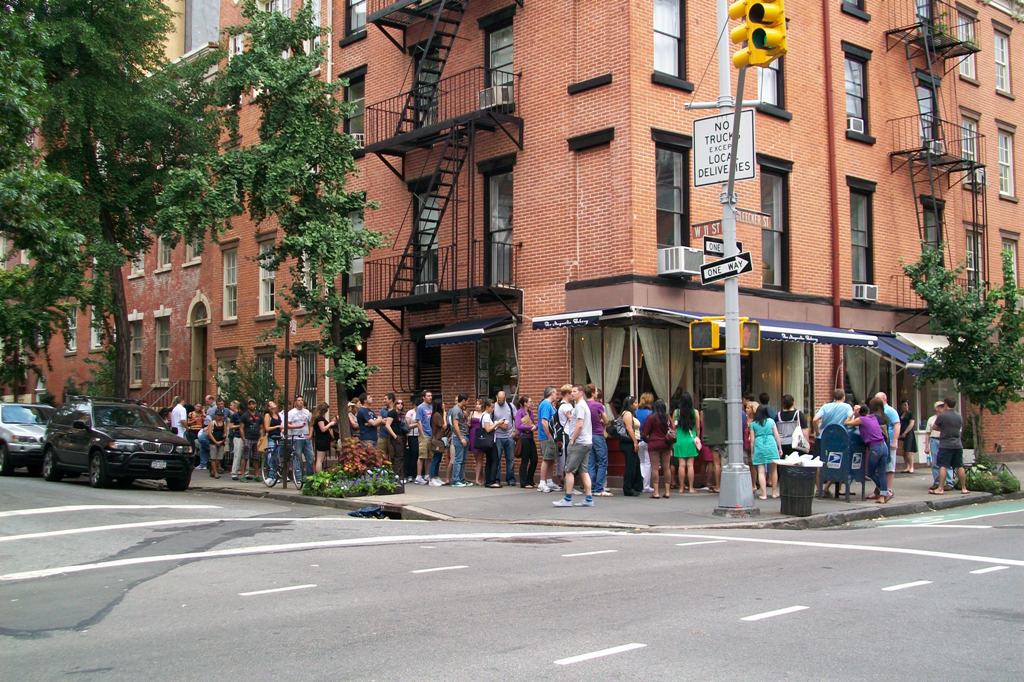
Not only are most movies worth seeing sold out hours before showtime here, but people line up crazy early to get the best seats.  Like, 90 minutes early.  For a city whose residents always seem to have somewhere to go and something to do, New Yorkers love waiting in line.  We wait in line for cupcakes, to get into Trader Joe's, and of course, for Apple products.  The immense planning and standing around (not to mention pre-order ticket surcharges) required to enjoy a night at the movies means that J and I only head to the cinema when it's something we really feel like we need to see on the big screen, which means that we pretty much only see things in IMAX.  Go big or go home, amirite?

This weekend we capped off a lovely day of water-based activities with the 1 am showing of Inception at the Lincoln Center IMAX.  

It.  Was.  AWESOME.  

I want to marry this movie.  It's beautifully shot, clever but not overly smug, impeccably edited, and has a well-thought out internal logic that's surprisingly followable and mostly consistent.  The themes, too, go well beyond the whole Matrix-y what-is-"real"-reality business, and I thought there were some pretty good messages that basically anyone could take home and apply to their own lives.

One of the big ideas in Inception is that of not letting your past decisions haunt you--actively choosing not to be crippled by regret.  It's what LDC's character has to do in order to Get the Job Done, and as a reminder, Edith Piaf's "Non, je ne regrette rien" wafts in throughout the movie, penetrating each dreamer's consciousness, signaling an imminent return to wakefulness.    

I'm currently writing up a project I did over the last year or so, and I'm realizing I could have done it better.  Not that what I did isn't scientifically sound, but if I'd made some different decisions--say, collected blood from my animals, or used a different method of euthanasia, I could be asking a lot more interesting and revealing questions.  At this point in the game, every publication I put out is important, and I feel like I didn't really maximize this one's potential.  

And no, I can't do it again.  I've got neither the time nor the money (nor, to quote Nicholson, the inclination) to re-do everything.  What I can do is make the most of the data I do have, find the most appropriate journal for it, and allow all those "if I'd only"'s not to get me down, but to fuel my future work.  

Like Leo, I have a Job to Get Done.  You probably do too!  And like Leo, we have all probably made some decisions we wish we hadn't.  The key to success, just as Leo learned, is to face those decisions head on, acknowledge them, but refuse to let them own us.  OK?  It's settled, then.  Can we pinky swear on this?

------------

PS- Candid Engineer also has a similarly-themed post up now.  Go read, if you haven't already (though you probably have)!

7.14.2010

Is "post-doc" passé?

In Spanish and French (and probably some other languages too), you introduce yourself by saying "me llamo __" or "je m'appelle __," both of which literally translate to "I call myself __."  I like this, for unlike the passive English "my name that someone else chose for me is," it suggests that you have at least some active role in defining yourself.  Here in America, alas, I don't get much chance to exercise the old français, but I do find that it's often necessary to define myself.  And it's not easy!

The post-doc is without question the most amorphous and uncertain of stages in an academic's Life Journey (not to mention the most hair-graying, ulcer-forming, and soul-crushing). And with the past decade's advent of even more nebulous terms like "super post-doc," it's more than likely that we struggle with identity issues--especially when faced with the task of defining ourselves, particularly to non-academics.  

You grad students and professors have it easy--people have ideas, however misguided, about what it means to be one of those.  But how do post-docs tell people who they are?  You know, like at parties with people who aren't in science?  A fellow blogger recently argued that the term "post-doc" is dead--it's lost what little cachet it might once have had, and is meaningless to those outside of academia, anyway.  He opts instead for "short term contract researcher," an expression that sounds to me like the kind of thing you should say if you didn't want to talk to the person anymore.  Whoops!  Looks like I need another drink / have to find the restroom / remembered I left the stove on! The other thing I don't like about it is that it doesn't convey the fact that you have a schmancy degree!  I mean, come on--I once had to fix my Old Navy sandals with a stapler, at least let me impress you with how educated I am!

No but seriously, fair enough--all the term "post-doc" really does say about you is that you should be addressed as "Dr" (something on which you should insist whenever appropriate!). When someone asks me what I do, I tell them that I am a scientist, and smile to indicate that I know how goofy that sounds.  They like that, because "scientist" is one of those jobs that might have been in your when-I-grow-up list when you're five--you know:  1) astronaut; 2) firefighter; 3) artist; 4) vet; 5) scientist**.  Only the most hardened of souls isn't at least somewhat intrigued by someone who describes herself as a scientist, and then they get to ask you the right questions to help paint a clearer picture of what you mean, rather than you launching into a jargony mish-mash about your PI or whatever.  

In the end, I think what's important when we step outside the Ivory Tower isn't necessarily what we call ourselves, but that the words we choose foster, rather than quash, conversation.  Scientists have a notorious reputation for not being able to communicate well to the public.  If we want that reputation to change, we should at the very least find a way to define ourselves, even when that definition is in constant flux.
___________________________________________________
** My parents are in possession of paper proof that as a 4-year old I told my nursery school teacher that when I grew up I wanted to "play in institutions."  I have no idea how I'd even have known what an institution was at that age, but I mean, way to follow my dreams, right?

7.05.2010

Standards Deviation

Growing up, there were a finite number of video tapes in our house. We didn't even have all that many, but it's like at a certain point we just stopped buying them, or bothering to record free HBO weekends. What this meant, then, is that my sister and I had seen everything we owned literally dozens of times, and could (and probably still can) quote most of them from start to finish. The brain's capacity for dialogue (and song lyrics!) is truly staggering, isn't it?

One of our favorites was the 1992 Cameron Crowe classic Singles, which while on the surface may seem to be your run-of-the-mill ensemble cast non-story about a bunch of 20-somethings looking for love in grunge-era Seattle, I'd argue that the film is notable not only for cameo appearances by some of the period's most influential figures--Chris Cornell, Eddie Vedder, and Tim Burton, to name but a few--but also for its genuine insight into the way people value themselves, and how that translates in their day-to-day interactions.

The movie is also eminently quotable, and one that has really resonated with me through the last 18 years (ZOMG) is a scene in which Campbell Scott asks Bridget Fonda what it is women really want from a guy. She replies:

Well, when I first moved out here, I wanted a guy with looks, security, caring...someone with their own place, someone who said "bless you" or "gesundheit" when I sneezed...someone who liked the same things as me, but not exactly...and someone who loves me.

He's all "Wow, that's a lot!" and she's all "Yeah, I've scaled back a little," and he's like, "So what's the list now?" and the answer:

Someone who says "gesundheit."

I feel like I've had pretty much the exact same conversation with myself over the last year or two, but regarding my job, not men (in that arena, as you might imagine, I have unwaveringly maintained the highest of standards). If you'd asked me a couple of years ago where I wanted to be in five years, I'd probably have said something like, "Well, I'd like a job in academia. Ideally, I'll be tenure track faculty somewhere, either at an R1 university or a prestigious liberal arts college. Either way, the students will be super smart. And it'll be in or near a really cool city, hopefully in the Northeast. And I'll be doing some teaching, but not too much teaching, and I'll have a perfectly small-to-medium-sized lab where we take an interdisciplinary and elegant approach to answering timely and clinically relevant questions. Etc!"

But had you asked me again, say, 6 months ago, my answer would have been more like, "Well, I'd like a job."  The unscored K99 made me seriously re-evaluate my place in the TT applicant pool, and like Bridget Fonda, I lowered my standards.  I applied EVERYWHERE, including many places that didn't at all fit my dream job description, and even started browsing job ads for non-academic positions.  Now, there are of course good reasons for doing this anyway, like experience and leverage and maybe-I'll-be-surprised-by-how-much-I-like-southwestern-Idaho, but if I'm being honest, it was at least in part out of feelings of desperation.

I HATE feelings of desperation!

Well, there's nothing like a couple of good meetings to show feelings of desperation the door, and I came back from two last month thinking to myself, Did I actually allow myself to entertain the possibility of a job in publishing?  We can DO this! (that's the royal "we," which I've found is also quite useful re: self-esteem.)

More concretely, I've been invited to apply for a grant from a Private Foundation, which would fund two years of work with Famous Dude.  I wrote the proposal, and it pleased Famous Dude.  Things are moving along.  I'm not letting myself get too excited, but I like to think of things as "definitely not not happening." If it all works out, my stock should rise significantly. And in anticipation, my standards have begun to creep up as well.

6.21.2010

Ph.Dishes - Brandied Cherries!

Aw, I can't stay mad for long--especially when it's cherry season! Here at Chez Dr Becca, the start of cherry season means it's time for a new batch of brandied cherries, and it is a happy time indeed.  If you've never had a brandied cherry before, you've truly been missing out on one of Life's Finer Pleasures ($20 and Under), so thank heavens you stumbled across this blog when you did! These are super easy and so incredibly delicious, especially in a tasty cocktail or over ice cream.  They also make a nice gift.  So go to the store, buy a big old bag of bings, and let's get started!

The first step in making brandied cherries is to change your clothes.  No seriously. You've got to pit your cherries, and pitting cherries is a juicy mess of an endeavor, so go ahead and put on whatever you'd normally reserve for yard work or something.  Pitting is an absolute necessity, not only because it makes eating them easier, but because it allows much more of your spicy brandy concoction to soak into the cherries. You might not own a cherry pitter, but they're not too hard to find, and not that expensive. I got mine at a restaurant supply store for ~$5.  It looks not wholly unlike a primitive torture device:


Now I'm not going to sugar coat things, here--pitting isn't fun. But you must persevere, so flip on the telly or a podcast or whatever and get to work!

When you're finished, set the cherries aside, and raid your spice cabinet. Be sure to grab some cinnamon, cloves, and cardamom--whole sticks/pods are preferable, but ground is OK too. Other spices in that general family can also be good, like allspice or maybe even a teensy bit of coriander.

Add equal parts white sugar and water to a large saucepan, about a cup of each per pint of cherries you have.  Add your spices, remembering that a little goes a long way, especially when it comes to cloves (and cardamom). And you know what else?  It certainly wouldn't kill you to add a splash of vanilla extract to the mix.  Heat it all and stir until the sugar is dissolved, and then let it simmer for around 5 min.  While you're waiting, you may as well go ahead and open your bottle of brandy.  And while your bottle of brandy is open, you might as well pour yourself a little glass.  I mean, what else would you do with 5 minutes?

After making sure that the brandy hasn't been poisoned (nobody wants poisoned brandied cherries!), turn off the heat and dump your cherries into the pot.  Stir in some brandy, maybe 1/2 cup per cup of water you  put in, but no one's complaining if you round up, you know what I mean?  Cover the pot and let everything sit until it's cooled to room temp, and then transfer cherries and syrup to a sealable jar.

Stick the jar in the fridge, preferably somewhere hidden, because now comes the hard part--you've got to wait for the cherries to macerate. They're going to taunt you every time you go for a wine cooler (hypothetically speaking), but you must resist!!  Give it at least 2 weeks before breaking the seal, and then get yourself a nice pint of Haagen-Dazs Vanilla or a nice Rittenhouse Rye Manhattan, and....MMMMMM!!!!!!!


6.19.2010

OMG NIH WTF?

There are many beautiful features of NYC that inspire feelings of awe and wonder in me; the Brooklyn Bridge, the view of midtown from the north side of the Central Park Reservoir, and the bourbon wall at Char No. 4 in Carroll Gardens are a few examples. But on the rare occasions that I get out to the mountains, it’s a whole other kind of awe. America is so pretty sometimes!


So I was out in the mountains this week for a small meeting, the focus of which was about as close as you can get to my exact specific interests. It was so awesome.  So much nature-y and science-y goodness!  Plus, I knew a ton of folks there—some friends from grad school, some acquaintances I’d met at previous meetings over the years—I felt like I was with my people, you know?

I learned so much and had so many great conversations, and I’m returning to New York just bursting with ideas for experiments.  It’s a nice feeling to want to get back to lab.  I also learned something VERY INTERESTING from my roommate re: the flexibility of NIH funding policies.

As we were introducing ourselves and getting to know each other, I mentioned that I’d unsuccessfully applied for a K99 award.  When she asked me whether I’d resubmitted, I lamented that by the time the following due date rolled around, I’d passed the 5-year postdoc mark, making me ineligible. 

“Oh no,” she said, “a guy in my lab was in the exact same boat as you with an unscored proposal and had passed the 5-year mark as well.  But he appealed to be allowed to resubmit on the grounds that he’d started the process before the 5-year mark, and they let him and it got funded!” 

Well! I’m sure you can imagine my response to that!


I mean, WTF, NIH?  It explicitly says in the K99-R00 FAQ that

Investigators who have more than 5 years of postdoctoral research training experience at the time of initial application or subsequent resubmission(s) are not eligible.

I might be crazy, but what this suggests to me is that you cannot resubmit if you have over 5 years post-doc experience?  I’m of course totally happy for this guy who found a way to make it all happen, but obviously if I’d thought there was any wiggle room in what is an exceptionally straightforward rule of eligibility, I’d have done the same thing!  There are many instances where a well-argued appeal makes sense, but I feel like in this case, it should either be a rule or not, you know?

Look, I know this post reeks of sour grapes, and I know that life isn't fair, and that complaining rarely achieves much beyond annoying the people listening to you (sorry guys!). But sometimes you just gotta vent, and I mean, isn't that what the interwebz are for?   

6.10.2010

Does your PI do your PR?

In case "PR" has some scientific meaning that's either not occurring to me or is relevant only in fields with which I'm not well-acquainted, I'm talking about Public Relations, here.  I've been thinking about this a lot, lately--the role of the PI in "advertising" his or her trainee, especially when the trainee is getting close to the next phase, be it grad student to post-doc, or post-doc to junior faculty.  I mean, it's in everyone's best interest for us to move onward and upward, right?  So why aren't they all selling the shit out of us?  Or if you're a PI, why aren't you selling the shit out of your trainees?  Or are you?

I'm not talking about writing letters of recommendation, here; everyone does that.  What I mean is, what extra things is your PI doing to show the world how great you are?  Or is this not happening?  And how do you feel about that? This is an essay question, to be answered in the comments by both trainees and PIs alike.

A couple of recent experiences have made me hyper-aware of this phenomenon.  First, I was at a small symposium in the city a couple of weeks ago.  Four really great talks, including one by my PI and one by a very famous collaborator dude (VFCD--different from the new Famous Dude I may work with soon).  My PI didn't present my work, but VFCD did.  And right before VFCD presented my work, he said, "this is the work of Dr Becca, who is over there (he points, I wave bashfully) and what she did that was really monumental was..." I mean, he actually said "monumental," which I thought was really nice of him.  I don't even know if I'd consider my work monumental, but it made me feel really good that he'd promote me like that.  Moreover, he deferred to me to answer any relevant questions after the talk, and not because he couldn't have answered them himself--VFCD is a bona fide brilliant person who has the mind-blowing ability to remember every tiny bit of data you've ever mentioned to him in the hallway or whatever.  So that was all really great.  I felt like I was being treated like an adult, having adult scientist conversations with other adult scientists, and I was so grateful to VFCD for that.

More recently, I was at a meeting in the Midwestern US (OMG $2.75 for Maker's Mark??!!??!).  During one of the talks, the speaker said, "this is the work of my post-doc ____, who is here at this meeting," and she showed a picture of this post-doc, which she continued to show a couple more times as she went through the data.  I saw this and thought, That is so smart and great!  Now people don't have to remember her name--they can just remember her face! And then they'll recognize her at future meetings, rather than having to randomly check her name tag and try and remember where they heard the name. I am so doing this when I am a PI.  Every time.

These truly small-in-effort gestures are, I think, really important for trainees.  While in the long run, we of course will (and should) bear the primary burden for promoting ourselves, you never know what a two-second mention, a photo, or a casual "monumental" here or there can really do for a person.

6.02.2010

Come on, get happy!

Arg, again I am a day late for the Scientiae Carnival, but I'm doing a post anyhow, dammit!  This month's theme is celebration, and it's a great way to start the summer.  I feel like we so often focus on the trials and tribulations of being scientists (and with good reason, as the trials and tribulations of scientists are many) that we often forget (or worse, are afraid/ashamed) to allow ourselves a little joy when things go well.  So, what do I have to be happy about?

When we last checked in with each other, I was reeling from the realization that I'd soon have to leave my lab and struggling against a bizarre but deep-rooted discomfort with success.  Since then, I've been working hard to get a plan together for September, and it's actually all been kind of......awesome.

The obvious choice for a new lab is a Famous Dude at a different NYC institution with whom I've recently done a little collaboration.  I met him in his office a couple of weeks ago and said, "I'd really like to continue the work I did with you last year, studying the effects of A on measure B, with a general focus on brain region C." He said, "Well, A might be OK, but we don't really do measure B anymore, and I'm not all that interested in brain region C." At that, both my jaw and heart dropped what felt like a mile. But before the waterworks could begin, he went on: "Look, the lab is pretty full, but I'd like to help you out.  Why don't you try to come up with some ideas of things you'd like to do that fit within the current focus of the lab, and we can talk again in a week or two?"

Believe it or not, at first I was devastated.  The thought of having to leave my pet project--my pet brain region, even--behind made me super sad.  I mean, what if someone else did the experiments while I was off being unfaithful, messing around with brain region D?  MY experiments?  It was then that I realized how head-over-heels in love I'd been with my own ideas, and how monumentally stupid that was (more on this in a future post, probably).  I got a grip and said to myself, "Self, we have a chance to work with Famous Dude, who pretty much sneezes Glamour Mag pubs.  Let's think of some sexy new experiments and make it happen!"

So I had some thoughts and I wrote them up in a little 1-page specific aim-type proposal, which I nervously sent off to Famous Dude one Sunday evening.  He got back to me within the hour with a response that included the expression "home run."  Not to brag or anything!

Now of course, nothing is set in stone (there are, as always, money issues) and thus part of me thinks we shouldn't dare start celebrating just yet.  But another part of me says, you know what?  Go ahead and bask in the glow of that tiny bit of validation--heaven knows we don't get that too often.  


So as things progress on this front, I'm allowing myself to feel cautiously optimistic.

In the meantime, I'm headed to two meetings this month to present some cool new data.  I finished my poster last night, and as is customary in the Dr Becca household, I made myself a cocktail in celebration.  It's called a Bijou, and it may be the most delicious potable on earth.  Equal parts gin, sweet vermouth, and green Chartreuse, stirred with ice until very cold and then strained into a cocktail glass, it is elegant, balanced, and the perfect accompaniment to just about anything.  Garnish with a homemade brandied cherry if you like (I like).

Cheers!

PS: Lots of other current events of note, but I think trying to squeeze it all into a single post may be ill-advised.  Stay tuned...